

Introduction
The legal industry is evolving rapidly, Legal Process Outsourcing and law firms are under constant pressure to deliver high-quality legal services while controlling operational costs. Clients expect faster turnaround times, accurate legal research, efficient document management, and cost-effective legal solutions. To meet these expectations, many law firms are turning to Legal Process Outsourcing (LPO).
Legal Process Outsourcing allows law firms and corporate legal departments to delegate specific legal tasks to experienced legal professionals outside their organization. This approach helps firms improve productivity, reduce expenses, and focus more on strategic legal work rather than routine administrative or research-based tasks.
Whether it is legal research, litigation support, contract management, document review, or paralegal services, LPO has become an essential part of modern legal practice.
In this comprehensive guide, you’ll learn everything about Legal Process Outsourcing, its benefits, services, and why thousands of law firms worldwide rely on trusted LPO providers like ClegLex.
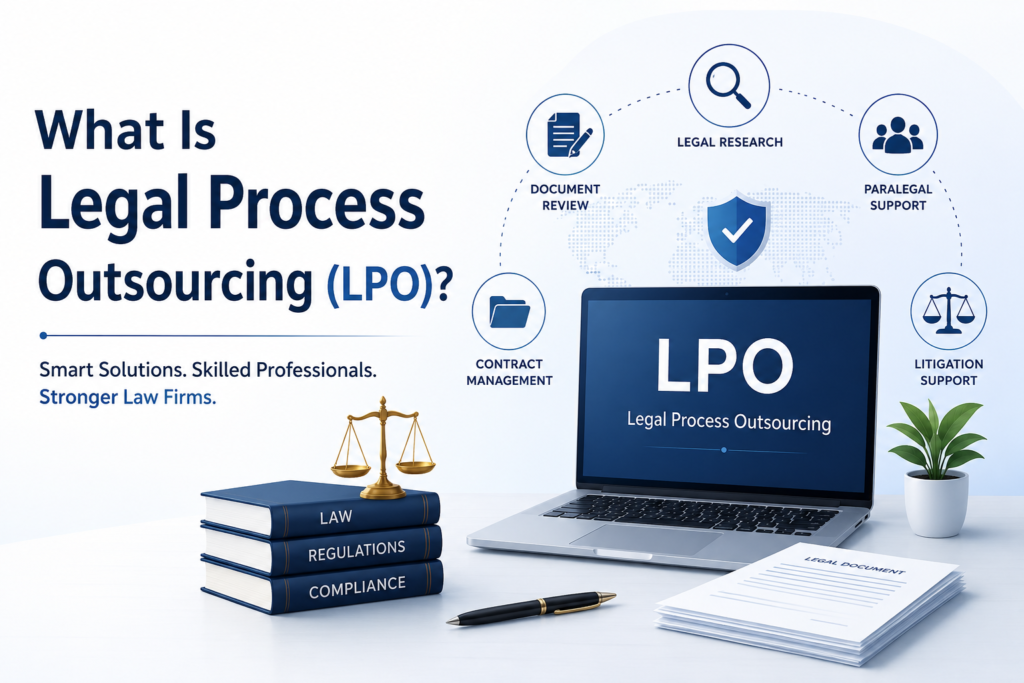
What Is Legal Process Outsourcing (LPO)?
Legal Process Outsourcing (LPO) is the practice of outsourcing legal services to qualified legal professionals or specialized legal support companies.
Instead of hiring large in-house teams, law firms outsource selected legal tasks to experienced professionals who work under strict confidentiality and quality standards.
These services may include:
- Legal Research & Writing
- Document Review
- Litigation Support
- Contract Management
- Intellectual Property Support
- Paralegal Services
- Legal Documentation
- Case Summarization
By outsourcing these services, law firms gain access to experienced legal professionals while reducing operational costs and increasing efficiency.
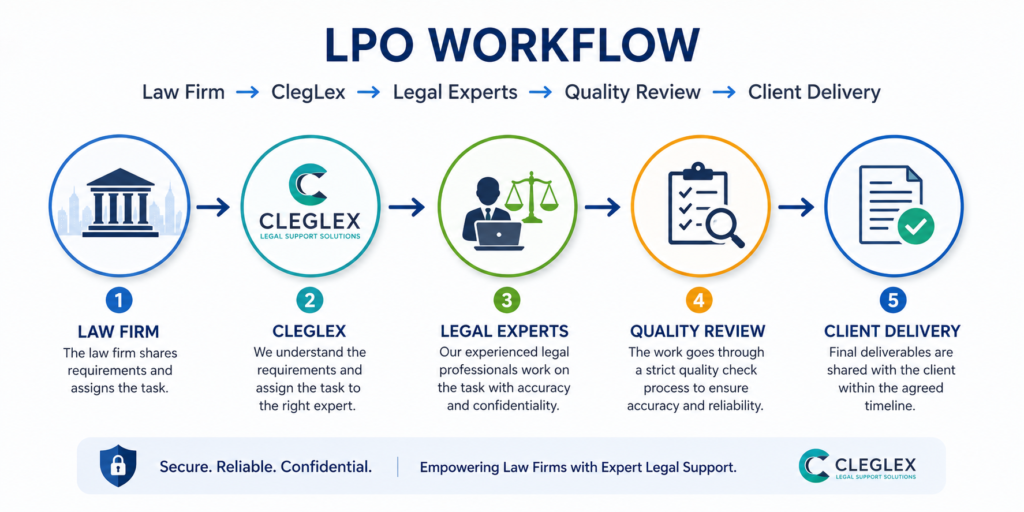
How Does Legal Process Outsourcing Work?
The process is simple and secure.
Step 1
The law firm identifies legal work suitable for outsourcing.
Step 2
The project is shared with the LPO provider.
Step 3
Experienced legal professionals perform the assigned work.
Step 4
Quality checks are completed.
Step 5
The final work is delivered within the agreed timeline.
This structured workflow ensures consistency, confidentiality, and high-quality legal support.
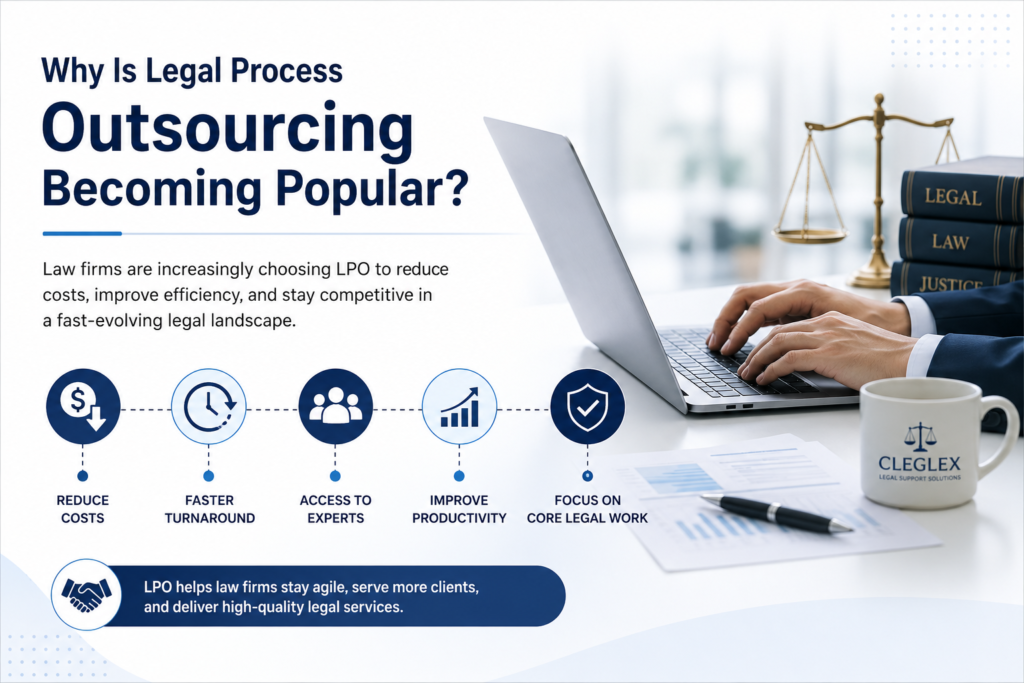
Why Is Legal Process Outsourcing Becoming Popular?
Modern law firms face several challenges:
- Increasing workload
- Rising operational costs
- Tight deadlines
- Growing client expectations
- Complex legal research requirements
Legal Process Outsourcing helps solve these challenges by providing scalable legal support whenever required.
Instead of increasing permanent staff, firms can outsource specific legal functions and focus on courtroom strategy, client relationships, and business development.
1. Benefits of Legal Process Outsourcing
Significant Cost Savings
Hiring full-time legal professionals can be expensive. Outsourcing reduces recruitment costs, infrastructure expenses, employee benefits, and training costs.
Law firms pay only for the services they need.
2. Access to Skilled Legal Professionals
LPO providers employ experienced legal researchers, paralegals, contract specialists, and legal writers.
This allows firms to benefit from specialized expertise without expanding internal teams.
3. Faster Turnaround Time
Dedicated legal teams ensure projects are completed within deadlines.
This enables law firms to serve more clients efficiently.
4. Improved Productivity
When routine legal work is outsourced, attorneys can focus on:
- Client consultation
- Court appearances
- Legal strategy
- Negotiations
- Business development
5. Better Quality Control
Professional LPO providers follow standardized quality assurance processes.
Every document undergoes review before delivery, ensuring accuracy and consistency.
Key Advantages of Legal Process Outsourcing
Legal Process Outsourcing (LPO) offers several strategic advantages for law firms and corporate legal departments. By outsourcing time-consuming legal tasks, organizations can focus on high-value legal work while improving efficiency and reducing operational costs.
Some of the key advantages include:
- Improved operational efficiency through dedicated legal support.
- Access to experienced legal professionals without expanding in-house teams.
- Faster turnaround time for legal research, document review, and contract management.
- Better scalability during periods of increased workload.
- Reduced administrative burden on attorneys.
- Enhanced document accuracy through multi-level quality review.
- Secure handling of confidential legal information.
- Cost-effective legal solutions that improve profitability and client satisfaction.
As the legal industry becomes increasingly competitive, Legal Process Outsourcing continues to help law firms deliver high-quality legal services while maintaining flexibility and operational excellence.
Challenges of Legal Process Outsourcing and How to Overcome Them
While Legal Process Outsourcing (LPO) offers significant advantages, choosing the right outsourcing partner is essential for achieving the best results. Law firms should understand the common challenges and the practical solutions to ensure a successful outsourcing experience.
1. Data Security and Confidentiality
Legal documents often contain highly sensitive client information. A reliable LPO provider follows strict confidentiality agreements, secure document management systems, and industry-standard data protection practices to safeguard client data.
2. Communication and Collaboration
Effective communication is essential for successful legal outsourcing. Establishing clear expectations, regular project updates, and dedicated points of contact helps ensure smooth collaboration between the law firm and the outsourcing team.
3. Quality Assurance
Accuracy is critical in legal work. Professional LPO providers implement multi-level quality review processes to verify legal research, contracts, and other deliverables before they are shared with clients.
4. Understanding Jurisdiction-Specific Requirements
Different countries and states have unique legal systems and regulations. Experienced legal professionals with jurisdiction-specific knowledge help ensure that outsourced work aligns with the applicable legal standards.
5. Choosing the Right Legal Outsourcing Partner
Law firms should evaluate an LPO provider based on experience, legal expertise, turnaround time, security standards, communication practices, and client satisfaction before establishing a long-term partnership.
When these factors are carefully managed, Legal Process Outsourcing becomes a reliable strategy for improving legal efficiency while maintaining quality, confidentiality, and client trust.
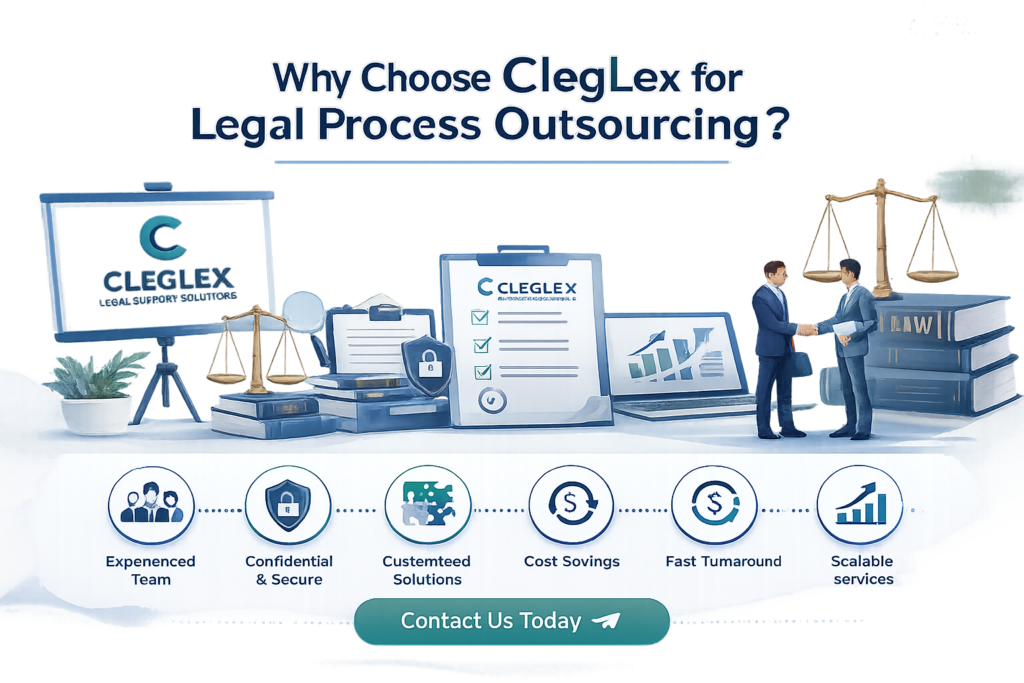
Why Choose ClegLex for Legal Process Outsourcing?
At ClegLex, we provide reliable outsourcing solutions designed to help law firms, legal departments, healthcare providers, and businesses improve efficiency while reducing operational costs. Our experienced professionals are committed to delivering accurate, confidential, and high-quality support tailored to your unique requirements.
Our Professional Outsourcing Services Include:
- Legal Research and Writing
- Document Review and Management
- Litigation Support
- Contract Management
- Paralegal Support
- Intellectual Property (IP) Support
- Medical Transcription Services
- Medical Billing and Coding Services
Why Businesses Choose ClegLex
- Experienced Legal & Healthcare Professionals
- Accurate, Reliable, and Quality-Assured Services
- Strict Data Security and Confidentiality
- Fast Turnaround Time
- Cost-Effective Outsourcing Solutions
- Scalable Support for Growing Organizations
- Personalized Client Support
- Customized Solutions Based on Business Requirements
Whether you are a law firm looking for dependable legal support or a healthcare organization seeking accurate medical transcription, billing, and coding services, ClegLex is your trusted outsourcing partner. We combine industry expertise with modern workflows to deliver secure, efficient, and professional services that allow you to focus on your core business while we manage the critical support functions.

